Thursday, January 21, 2016

Eagle

Eagle


DescriptionEnglish: Eagle
한국어: 독수리
Date12 January 2007
Sourcehttp://commons.wikimedia.org/
AuthorQuadra
PermissionPublic Domain
LicensingThis file is from the Open Clip Art Library, which released it explicitly into the public domain.

This file is made available under the Creative Commons CC0 1.0 Universal Public Domain Dedication.


From Wikimedia Commons http://commons.wikimedia.org/

Monday, January 11, 2016

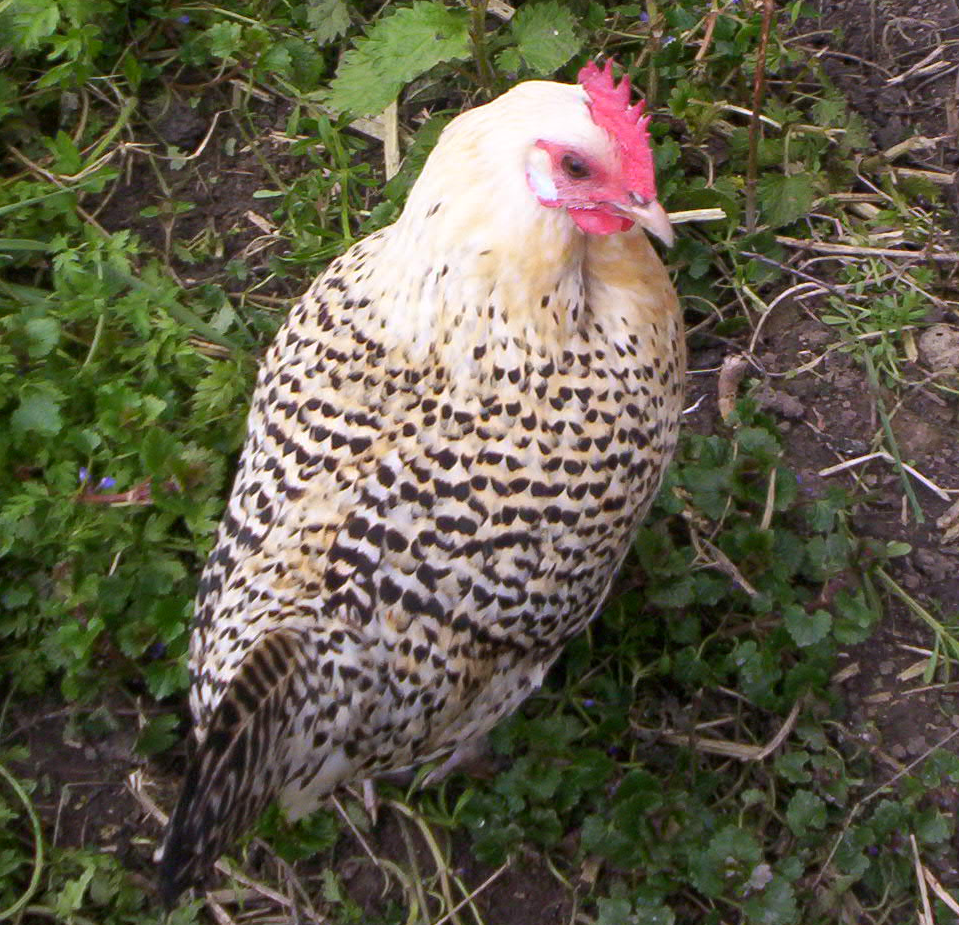
White chicken

White chicken


DescriptionEnglish: A white, bantam variation of the North Holland Blue species chicken, age appr. 6m.-1y.
Date11 January 2005
Sourcehttp://commons.wikimedia.org/
AuthorOlijven
Camera location53° 17′ 17.75″ N, 5° 50′ 04.17″ E
PermissionPublic Domain / CC-zero
LicensingThis work has been released into the public domain by its author.


From Wikimedia Commons http://commons.wikimedia.org/

Saturday, January 2, 2016

Larus crassirostris, Dokdo, Korea

독도 괭이갈매기 (Larus crassirostris, Dokdo, Korea)

출처 : 경상북도

DescriptionEnglish: Larus crassirostris, Dokdo, Korea
독도 괭이갈매기(Larus crassirostris)
DateJan 7, 2015
Source경상북도 사이버 독도 (http://www.dokdo.go.kr/)
Author경상북도
Camera location.
Permission독도무료배부사진
Licensing경상북도 사이버 독도 (http://www.dokdo.go.kr/) 독도무료배부사진 게시판의 사진은 경상북도에서 독도홍보를 위해 제작한 사진으로 대한민국 국민 및 해외동포분들은 다운로드 받아 사용하셔도 무방합니다.
단, 사진하단에 있는 출처를 꼭 밝히시고 사용해 주시기 바랍니다.

이 곳은 조건 부합시 배포가능한 사진들을 모아놓은 곳이며, 저작권이나 기타 관련 권리를 보유하지 않고 있습니다. 출처는 이곳이 아니며, 위에 설명에 언급된 곳을 직접 참조하시기 바랍니다.


From 경상북도 사이버 독도 (http://www.dokdo.go.kr/)

Sunday, August 9, 2015

White Tiger (白虎)

White Tiger (白虎)

Alternative Names (異名):
白虎, 백호(Korean), Baek-ho, Bái Hǔ(Standard Mandarin), White Tiger, Byakko(Japanese)


The White Tiger (Chinese: 白虎; pinyin: Bái Hǔ) is one of the Four Symbols of the Chinese constellations. It is sometimes called the White Tiger of the West (西方白虎, Xī Fāng Bái Hǔ), and it represents the west and the autumn season.


The Seven Mansions of the White Tiger

Like the other Four Symbols, the White Tiger corresponds to seven "mansions", or positions, of the moon.

Legs (Chinese: 奎; pinyin: Kuí)
Bond (Chinese: 婁; pinyin: Lóu)
Stomach (Chinese: 胃; pinyin: Wèi)
Hairy Head (Chinese: 昴; pinyin: Mǎo)
Net (Chinese: 畢; pinyin: Bì)
Turtle Beak (Chinese: 觜; pinyin: Zī)
Three Stars (Chinese: 參; pinyin: Shēn)


Origin

During the Han Dynasty, people believed the tiger to be the king of all beasts. Legend had it that when a tiger reached 500 years old, its tail would turn white. In this way, the white tiger became a kind of mythological creature. It was said that the white tiger would only appear when the emperor ruled with absolute virtue, or if there was peace throughout the world. Because the color white of the Chinese five elements also represents the west, the white tiger thus became a mythological guardian of the west.

In Book of Tang, the reincarnation of White Tiger 's Star is said to be Li Shimin's general Luo Cheng (羅 成) and the reincarnation of Azure Dragon 's Star is said to be the rebellious general Dan Xiongxin (單 雄信). They two are sworn brothers of Qin Shubao (秦 叔寶), Cheng Zhijie (程 知節) and Yuchi Jingde (尉遲 敬德). Their souls after death are said to possess the body of the new heroes of Tang Dynasty and Liao Dynasty, Xue Rengui (薛 仁貴) and He Suwen (郃 苏文).

In some legends of the Tang Dynasty's general Xue Rengui, he's said the reincarnation of the White Tiger's Star. And his archenemy, Liao Dynasty's prince He Suwen is the reincarnation of the Azure Dragon's Star.


http://en.wikipedia.org/wiki/Chinese_mythology

http://en.wikipedia.org/wiki/Category:Chinese_mythology


Chinese constellations | Chinese astronomy | Chinese mythology | Legendary mammals | Chinese legendary creatures | Chinese mythology stubs

White Soft-shelled Turtle

White Soft-shelled Turtle

Alternative Names (異名):
White Soft-shelled Turtle


White Soft-shelled Turtle a character featured within the famed ancient Chinese novel Journey to the West. This ancient white turtle is an entity from Heaven that had performed ill deeds on accident and is now forced to roam around the eastern River of Heaven. After Sun Wukong and the others retrieve two children from the hands of a sinister demon, they are thanked greatly by the Chen family and continue on their way through the River of Heaven. This is at the point in which the ancient white turtle is seen for the first time. After the large turtle leads Sanzang and his disciples across the river, he pleads for Sanzang to ask the lord Tathagata Buddha when he is to be converted and how long he is to live. Unfortunately however after meeting with the Tathagata, Sanzang never remembered to ask about the turtle. After Sanzang and the others were returning to China atop this white turtle once again – at the point in which they were dropped half way to China to complete their 81st ordeal – the large white turtle asks Sanzang as like many years before about his future. The ashamed Sanzang does not say anything, leading for the white turtle to submerge himself in rage which would have normally drowned the Tang priest. After Sanzang and the others reached shore and dried off their ancient scriptures, this ancient white turtle would never truly be shown again in it's dismay.


References

Journey to the West Chapter 99 - Wu Chung-en


http://en.wikipedia.org/wiki/Chinese_mythology
http://en.wikipedia.org/wiki/Category:Chinese_mythology
http://en.wikipedia.org/wiki/Portal:Mythology


Journey to the West | Chinese mythology | Chinese history stubs

Sunday, July 5, 2015

Snorkelers swimming with a Green sea turtle


Snorkelers swimming with a Green sea turtle (Chelonia mydas) at Kahaluu Beach County Park in Kahaluʻu Bay — on the Big Island of Hawaiʻi.
Date: 6 January 2007
Source: http://www.flickr.com/photos/butsky/357944052/, http://commons.wikimedia.org/wiki/File:Snorkelers_with_sea_turtle_(Kahaluu_Bay).jpg
Author: Vlad & Marina Butsky

This file is licensed under the Creative Commons Attribution 2.0 Generic license.